Have you ever wondered why we have roots in our teeth? It turns out, they play a crucial role in keeping our smiles healthy and strong.
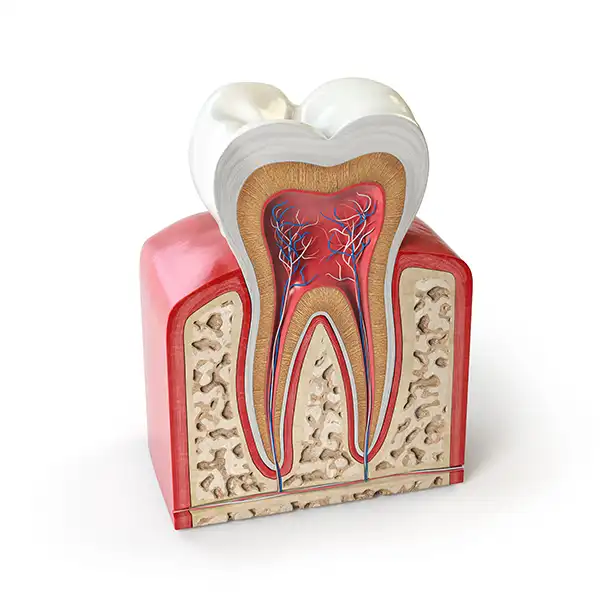
Imagine your teeth as trees. The crown is the visible part above the gum line, like the branches and leaves. But just like a tree needs sturdy roots to stay anchored and healthy, our teeth rely on their roots for support and nourishment.
These "invisible" roots extend deep into the jawbone and are made up of a soft tissue called the pulp. This pulp contains nerves, blood vessels, and connective tissue that provide essential nutrients and sensations to the tooth.
So, what happens if the pulp becomes damaged or infected? This is where a root canal comes in.
What is a root canal?
A root canal is a treatment that removes the infected or damaged pulp from the tooth's root canal and then seals the space to prevent further infection. It may sound scary, but it's actually a very common and effective procedure that can save your tooth and prevent the need for extraction.
Why would I need a root canal?
There are several reasons why you might need a root canal. Some of the most common include:
•
Deep decay: If a cavity reaches the pulp, it can become infected.
•
Trauma: A blow to the tooth can damage the pulp, even if there is no visible crack or chip.
•
Repeated dental procedures: Multiple fillings or crowns on the same tooth can weaken the pulp and make it more susceptible to infection.
What are the benefits of a root canal?
A root canal can offer several benefits, including:
•
Saving your natural tooth: A root canal can prevent the need for extraction, which can help you maintain a healthy and functional smile.
•
Relieving pain: Once the infected pulp is removed, the pain and discomfort will subside.
•
Preventing further infection: Sealing the root canal prevents bacteria from spreading and causing further damage.
•
Restoring function: After a root canal, your tooth can be restored with a crown or filling, allowing you to chew and speak normally.
What to expect during a root canal:
A root canal is typically performed by an endodontist, a specialist in treating the inside of the tooth. The procedure usually involves the following steps:
•
Numbing the area: Local anesthesia is used to numb the tooth and surrounding tissues.
•
Accessing the pulp: A small opening is made in the crown of the tooth to access the pulp chamber.
•
Removing the pulp: Specialized instruments are used to remove the infected or damaged pulp from the root canal.
•
Cleaning and shaping the canal: The root canal is thoroughly cleaned and shaped to remove any remaining bacteria and debris.
•
Filling the canal: The canal is filled with a biocompatible material to seal it and prevent further infection.
•
Restoring the tooth: A crown or filling is placed on the tooth to restore its strength and function.
Recovery after a root canal:
After a root canal, you may experience some mild discomfort or sensitivity for a few days. Over-the-counter pain medication can usually manage this. Your endodontist will provide specific instructions on how to care for your tooth during the healing process.
In conclusion,
While the thought of a root canal may not be appealing, it's important to remember that it is a safe and effective procedure that can save your natural tooth and prevent the need for extraction. If you are experiencing any pain or discomfort in your teeth, be sure to see a dentist right away to determine if a root canal is necessary.



 Have you ever wondered why we have roots in our teeth? It turns out, they play a crucial role in keeping our smiles healthy and strong.